You can make a backyard glow, outline a pathway like a runway, and still get a correction notice if your light spills past the fence or runs too bright after midnight. Denver rewards thoughtful outdoor lighting with safe streets, inviting yards, and energy savings, but the city also expects you to follow rules on brightness, glare, and timing. The good news is that compliance sits naturally inside good design. When you nail fixture selection, placement, and controls, you not only pass plan review and inspection, you get cleaner night skies and longer lasting gear.
This guide walks through the moving parts that matter for exterior lighting in Denver. It folds together what the Denver Energy Code asks for, how the Denver Zoning Code handles light trespass, and what practical choices make sense for homes, multifamily sites, and commercial properties. Whether you are refreshing a porch, laying out denver pathway lighting for a multifamily courtyard, or planning a full set of denver outdoor fixtures for a retail lot, the path is more straightforward than it looks.
Why Denver has strong opinions about exterior light
Denver sits at altitude with dry air and frequent clear nights. That combination makes glare and skyglow worse than in many coastal cities. Snow cover, which can last for days or weeks in some winters, doubles down by bouncing light back into eyes and windows. Add wildlife corridors and the fact that neighborhoods sit tight against commercial districts, and you see why denver lighting solutions lean toward shielded, warm, and well controlled sources. If you have ever walked past a storefront blasted with 5000K floods in January, you know how punishing poor choices can feel.
On residential blocks, lighting that respects property lines prevents neighbor complaints and service calls. In denser corridors, compliant denver exterior lighting improves pedestrian comfort without feeding light pollution. The same principles hold for parks and trails, where colorado outdoor lighting now often prioritizes the night sky as much as it does safety.
The codes that govern exterior lighting in Denver
Two families of rules shape outdoor lighting in Denver.
First, the Denver Energy Code, which is the city’s energy efficiency rulebook, is closely aligned with the 2021 IECC. For exterior lighting, it focuses on how much power you use and how smart your controls are. Expect automatic shutoff at dawn, and some level of power reduction during low activity periods. For many building types, a reduction of around 30 percent or more after hours is a common threshold. The code recognizes that not all spaces are equal, so active entrances and loading areas get different allowances than ornamental facade lighting.
Second, the Denver Zoning Code addresses light impact on neighbors and the public realm. It cares about glare, spill, and uplight. While section numbers shift with updates, the gist stays the same: shield the lamp from view, keep illumination on your site, and avoid throwing light up into the sky. Lighting zones are typically tighter near residential districts compared with downtown cores. When your project sits close to single family homes, assume stricter limits on brightness and hours of operation.
These rules dovetail with accepted industry guidance. You will see references to IES illuminance recommendations and BUG ratings used to pick fixtures and demonstrate compliance. A professional submittal often includes an IES-based photometric plan, a lighting schedule with BUG values and correlated color temperature, and control narratives that show timing and dimming behavior.
If your property lies within a historic district, there is a third voice in the room. Denver’s Landmark Preservation staff reviews exterior changes for compatibility with the district’s character. There is a practical path through this as well, which we will cover later.
Light levels that meet the mark and feel good at night
You do not need to flood a site to make it safe. Most denver landscape lighting and denver garden lighting lands between 0.3 and 2 footcandles on walking surfaces, depending on use. Residential pathways and patios feel comfortable at the lower end of that range, while commercial entries often sit higher for recognition and wayfinding. For vehicle areas, you will see higher targets during active hours, but even there, uniformity and glare control do most of the safety work.
For property lines, plan reviewers often look for low values, commonly at or near 0.2 footcandles at the boundary. If your neighbor’s yard reads brighter than that due to your fixtures, you are likely to be asked for shielding, a lower tilt, or a dimmer setting. Keep a clean cut off using full cutoff or Type V with tight glare control near fences. For denver yard lighting inside a tight lot, low mounting heights with close spacing beat tall poles. You get smoother light without harsh angles into windows.
In winters with snow on the ground, your real-world light levels can read 20 to 40 percent higher than simulations. If you have ever stepped onto a driveway lit by a single 15-watt LED bollard and felt surprised by the brightness after a storm, that is albedo doing its work. During design, aim slightly conservative on brightness if your fixture is pointed downward near reflective surfaces. It is easier to nudge up a dimmer than to re-aim a field of floods after a neighbor calls.
Color temperature, comfort, and wildlife
Colorado cities have been moving toward warmer white at night. Denver is no exception. For most outdoor lighting in Denver, 2700K to 3000K strikes a balance between color rendering and night comfort. The warmer you go, the less blue content you throw into the sky and windows, which helps both the night sky and people’s sleep. In residential districts and near parks, 2700K often reads right to the eye.
You occasionally need cooler white for tasks that demand it, such as high color discrimination near loading areas or public art that needs a neutral base. Even then, make it the exception and not the default. If you sit near a corridor used by migratory birds, avoid upward light and high CCT even more strictly. A tight uplight limit and warm CCT change almost nothing about wayfinding and everything about glare and environmental impact.
Picking denver outdoor fixtures that pass plan review
Fixture selection is where compliance and aesthetics meet. You will see three letters again and again in denver lighting schedules: BUG. Backlight, Uplight, and Glare ratings come from IES TM-15, and they tell you how the light will behave in the field. For most neighborhood projects, look for U0 or U1 to keep light out of the sky, and a G rating low enough to avoid harsh brightness at normal viewing angles. Backlight tolerance depends on distance to the property line. If you are mounting a sconce three feet from the fence, you want a very low B and good shielding. If you have ten feet of buffer and a wall to catch spill, you get more room to maneuver.
On facades, wall packs with full cutoff optics satisfy both zoning intent and energy targets without shouting at the street. For pathway lighting, look at bollards with internal louvers or glare caps. Many well designed bollards at 10 to 15 watts produce a soft pool of light and a uniform path when spaced 12 to 20 feet apart, depending on lens type. For denver outdoor lights in parking courts, favor Type II or Type III distributions along edges and Type V only in the center of larger lots where you can keep distance from property lines.
Durability matters here. Denver’s sun is merciless at elevation, and UV degrades cheap plastics fast. Powder coated aluminum with a quality finish, or marine grade stainless near heavily salted areas, gives you real service life. Pick IP65 or better for exposed fixtures, and check IK impact ratings for bollards in mixed use areas. If you plan denver pathway lighting in an area that sees snow shovels and strollers, it pays to specify bollards with stout anchors and replaceable tops.
Controls that satisfy the code and help people sleep
Most of the energy code’s exterior controls make common sense. Every exterior fixture should shut off during daylight using a photo sensor, a time clock, or both. After hours, most non egress lighting should dim. A common approach uses a photocell on each circuit and a central time clock that drives two modes. During business hours, the circuit runs at 100 percent for entries and at a task appropriate level for site lighting. After closing, you switch to a reduced mode, often 30 to 50 percent, with occupancy sensors that bring levels up briefly when someone walks by.
You do not need to obsess over networked controls unless your program calls for it. Simple, reliable parts make life easier in Denver’s freeze thaw cycles. Use line voltage sensors rated for low temperatures, and test the hold time during commissioning. On a small retail facade on Colfax, we cut neighbor complaints in half just by trimming wall pack output to 40 percent after 10 pm and reducing hold time from five minutes to two. The site felt just as safe. People noticed the quieter night.
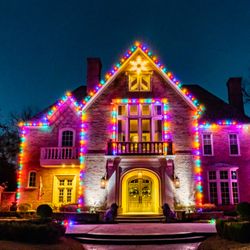
For purely decorative denver outdoor illumination, you often need an earlier shutoff. Accent uplights on trees, string lights in a court, and grazing on brick all look wonderful during open hours. Most zoning reviewers want them off later at night. A separate circuit makes this easy to demonstrate and enforce.
Pathways, porches, parking, and signs
Exterior lighting denver projects fall into familiar zones, each with its own details.
Pathways thrive on rhythm more than punch. Keep sources low, shielded, and warm. A run of compact bollards, 12 to 16 inches tall, reads more welcoming than four tall poles on a small site. In residential settings, knit path lights with the soft spill from porch sconces so the composition feels like one system. For outdoor lighting solutions denver near townhomes, we have had good luck with 2700K integrated LED bollards at 8 to 12 watts, spaced 14 to 16 feet on center along straight walks and tightened to 10 feet on curves.
Porches and stoops should light faces, not lawns. Downlight from a sconce mounted around 66 to 72 inches centers the beam on faces at the threshold. If you have glass in the door, mind reflections. A warm source with a high CRI makes security cameras perform better while avoiding the stark, cold look that cameras sometimes push people toward.
Parking areas live or die on uniformity and glare control. For small lots, two or three poles at 12 to 16 feet, each with full cutoff optics, can give good coverage without lighting neighboring yards. On taller poles, you reach more area, but you also risk greater spill. If you can meet your target with shorter poles placed closer, you gain control and comfort. Keep E average reasonable and let your controls do work after hours.
Signs and address numbers matter for first responders. You can highlight an address with a small, shielded downlight aimed tightly at the placard. Keep the beam on the numbers, not into the street. For business signs, make sure any uplight remains tight enough to avoid sky light. Many sign packages now fold the lighting into the graphic with internal LED, which solves a lot of spill issues if the brightness is tamed.
Historic districts and compatibility without nostalgia traps
Working within a historic district or on a landmarked structure shifts the conversation from raw performance to character and compatibility. Landmark staff care about fixture style, mounting method, and visibility from the street. They also care that improvements remain reversible. You can usually land on a design that satisfies both preservation and performance, even if that means picking a traditional form factor with modern internals. Shielded gaslight style lanterns with 2700K LED and a hidden cutoff work far better than the clear glass, bare filament look that causes glare and complaints.
If you are proposing denver outdoor lighting on alleys in a historic context, wall mounted full cutoff fixtures at modest mounting heights read honest to the period without creating light trespass. Keep conduit runs neat, and mount into mortar joints when feasible to protect masonry.
Designing for altitude, weather, and maintenance
At 5,280 feet, you get 20 to 25 percent more UV than at sea level. Plastics yellow, gaskets dry, and cheap powder coats chalk out. In practice, that means:
- Choose fixtures with UV stabilized lenses and durable finishes. If a datasheet calls out ASTM G154 testing or a 5 year finish warranty, that is a good sign. Specify corrosion resistant hardware. Stainless fasteners and proper isolators between dissimilar metals matter when ice melt enters the picture. Confirm temperature ratings. Many occupancy sensors and drivers have minimum operating temperatures. Denver sees nights below 0°F some winters. Your equipment needs to wake up reliably in that air.
Snow is the other factor. Bollards buried by snow stop doing their job and take hits from shovels and plows. Where plows run, pull lights back from curb edges or choose taller bollards with protected optics. For steps and short runs, integrate lighting into rails or risers so the source stays out of harm’s way.
Documentation that speeds approval
City reviewers appreciate clear, concise submittals. Even modest projects benefit from a simple packet that shows what you plan to build. For denver lighting installations, I aim for four essentials:
- A site plan or elevation with fixture locations, mounting heights, and aiming notes. A cut sheet for every fixture with BUG rating, CCT, input watts, IP rating, and a note on finish and hardware. A one page control narrative describing how and when the system dims or shuts off. If the scale warrants it, a photometric plan that shows footcandle levels on key surfaces and at property lines.
For small residential scopes, the photometric plan may not be required, but it often pays to include a sketch and a quick write up of intent. If your denver yard lighting sits close to neighbors, a simple diagram that shows shields and directions saves time later.
Electrical permits are typically needed for new circuits. Low voltage does not always mean no permit. If you are using a transformer that plugs into a receptacle and you are swapping like for like, you may avoid a permit, but adding new wiring, trenching, or running conduit generally triggers review and inspection. When in doubt, call or check the city’s online permit guide. It is easier than unwinding a red tag.
A simple five step path to compliant exterior lighting
- Scope your needs. Identify entries, paths, parking, signs, and accent targets. Decide what must run all night and what can dim or go off. Pick warm, shielded fixtures. Aim for 2700K to 3000K, full cutoff where feasible, and BUG values appropriate to distance from property lines. Design controls once, document twice. Use photocell plus a time schedule with after hours reduction. Separate decorative circuits if needed. Model or mock up. Run a basic photometric or do an on site test with one or two fixtures before buying dozens. Submit a clean package and build as drawn. Keep mounting heights, aiming, and shields as specified, then commission the controls.
Common pitfalls I keep seeing
The most frequent misstep is overlighting. A set of 20 watt floodlights feels innocent until it lights up a second story bedroom across the way. In a Washington Park project, the homeowner loved bistro string lights. The first pass used a bright, 2200K commercial strand at 10 bulbs per span. Even at a warm tone, the globe count and brightness proved too much for the neighbors. We swapped to a dimmable strand with fewer, shielded bulbs, reduced output to 25 percent after 9 pm, and added a timer. The patio kept its charm and the neighbor calls stopped.
Another pitfall is ignoring optics. A “dark sky” label does not guarantee comfort. I have seen fixtures with U0 ratings still force harsh brightness into sightlines because the glare component ran high. Look at the G in BUG, not only the U. A G1 or G2 lens often transforms a space that would otherwise feel harsh.
Lastly, contractors sometimes mount a wall pack at 10 feet simply because a previous box exists there. In tight lots, dropping to 8 feet, swapping in a tighter optic, and tweaking the tilt to zero can cut trespass and improve uniformity.
Costs, payback, and rebates
LED denver outdoor lighting has matured to the point where quality fixtures at 8 to 20 watts replace old 70 watt HPS and 100 watt metal halide gear. Energy drops by half or more, and maintenance plummets. Simple controls then save another slice by trimming runtime. Over a year, a small retail facade with six 25 watt sconces that dim to 40 percent after hours may use 300 to 500 kWh less than the same facade left full bright. At Colorado residential rates, that is not a fortune, but in commercial settings with more fixtures and longer hours, savings stack.
Xcel Energy, the major utility in Denver, periodically offers rebates for high efficiency lighting and, in some programs, for controls. Exterior specific incentives shift by cycle, and they often focus on commercial customers. Check the current Xcel Energy Colorado business lighting rebates before you bid. When rebates align, you can see paybacks in two to four years on retrofit projects that replace legacy fixtures and add controls. On new builds, the “payback” shows up as lower operating cost and fewer neighbor issues from day one.
Two brief case snapshots
A LoHi townhome row needed denver pathway lighting and small porch accents that would not irritate the apartments across a narrow alley. We specified 2700K shielded steplights for stairs, 12 watt bollards with internal louvers for the shared walk, and full cutoff sconces at entries, each mounted at 68 inches. Controls used a central time clock with a photocell input. After 10 pm, the walks dimmed to 35 percent, and the sconces dropped to 50 percent while steplights stayed at task levels for egress. The photometric plan showed under 0.2 footcandles at the alley line. The inspector appreciated the clear controls narrative and passed us on the first visit.
In a small commercial lot off Federal Boulevard, fixtures along the edge had been installed years ago with wide open optics aimed at car windows and bedroom windows beyond the fence. We swapped to Type II full cutoff heads at 3000K, reduced pole height from 20 to 14 feet along the boundary, and tilted heads to zero. We then programmed dimming to 30 percent after 11 pm, with pole mounted PIR sensors bringing levels up when motion was detected. Neighbor complaints dropped, and the business owner said the site felt calmer without losing security.
Where aesthetics and compliance shake hands
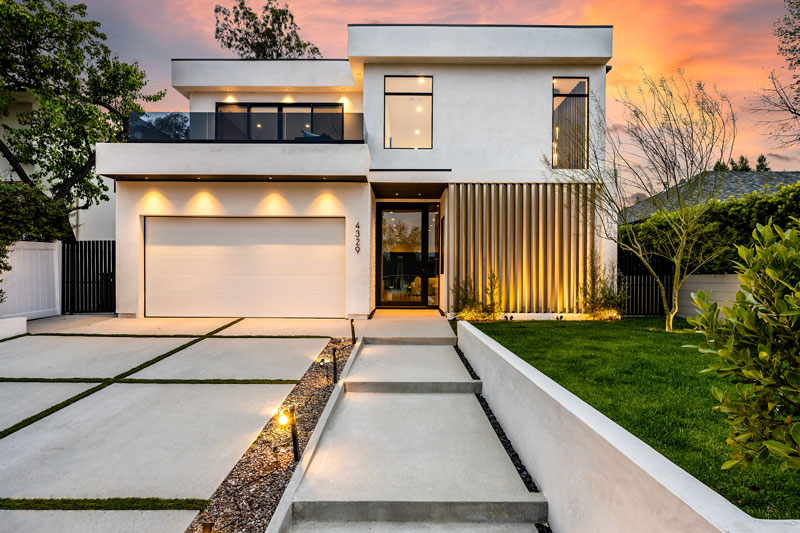
The best denver lighting reads as if it belongs. It frames a door, walks you to a gate, reveals texture on brick, then fades into a quiet street. When designers and contractors respect the rules on light trespass, uplight, and after hours behavior, the result tends to be more beautiful, not less. Warm sources and tight optics flatter plantings. Shielded path lights make feet feel sure. Facade grazers on a timer pull a building forward during open hours and let it recede again at night.
For homeowners tweaking denver yard lighting, the same logic applies. A few well chosen fixtures, placed with care, perform better than a dozen cheap floods clipped to the eaves. For commercial properties chasing outdoor lighting systems denver wide, a short control narrative and a firm hand on BUG ratings simplify approvals and keep neighbors on your side.
Final notes on process and judgment
Codes evolve. Denver’s energy and zoning provisions refresh on a steady rhythm, often aligning with state and national model codes plus local amendments. Treat every project as a small dialogue: check the current Denver Energy Code, confirm any zoning overlays or historic status for the parcel, and design with those facts. Then lean on field wisdom. If a bollard sits within shovel range, protect it. If a bedroom window faces your site, push for warmer, lower, and tighter light.
There is room for artistry in colorado outdoor lighting, even inside the constraints. A row of aspens can glow softly from shielded, ground recessed lights with tight beams and strict timers. A brick wall can show its relief with a gentle, downward grazing, never a harsh uplight. A porch can welcome guests with light on faces, not on the street.
Denver rewards that kind of restraint with easier approvals, fewer callbacks, happier neighbors, and lower bills. That is what makes code compliance feel less outdoor lighting denver like homework and more like the backbone of good design.